✦ FOOD & DRINK
Why the Islay Festival Is More Than Just Whisky
Fèis Ìle, pronounced faysh eye-luh, has been running since 1986 and was always about more than drams. The whisky is a door. Islay is the room you walk into.
Fèis Ìle has a reputation problem.
Not a bad one, quite the opposite. It is so famous as a whisky festival, so thoroughly associated with limited-edition releases and distillery open days and the particular, irreplaceable frisson of opening a bottle on the island where it was made, that everything else gets crowded out of the story. People book the ferry months in advance for the Ardbeg Day release. They plan their entire trip around a single distillery masterclass. They arrive thinking about peat and phenol parts per million and cask-strength expressions.
And then something happens. The ferry rounds the headland, and Islay appears. The peat smoke is in the air before they've even disembarked. Someone waves at them on a single-track road, just waves, for no reason other than that this is what people do here, and by the end of the first day, they're not thinking about whisky half as much as they thought they would be.
"Fèis Ìle was created as a celebration of the island itself: its Gaelic culture, its music, its community, its landscape. The whisky is the door. Islay is the room you walk into."
Fèis Ìle, Gaelic for Islay Festival, pronounced faysh eye-luh, has been running since 1986. And almost everyone who walks in once comes back.
The Island: Islay Before the Drams
Islay, pronounced EYE-luh, never IS-lay, is the fifth-largest of Scotland's islands, sitting in the Inner Hebrides off the coast of Argyll. It covers around 620 square kilometres of peat bog, sandy beach, farmland, moorland, and rocky coastline, with a population of just over 3,000 people. It is known, with complete justification, as the Queen of the Hebrides.
Around a quarter of its residents still speak Scottish Gaelic as part of daily life, one of the highest proportions outside the Outer Hebrides. The language is woven into the landscape, the road signs, the culture, and the very identity of the place in a way that makes Islay feel like a genuinely different country from the Scottish mainland. This is not a performance of cultural heritage. It is the living thing itself.
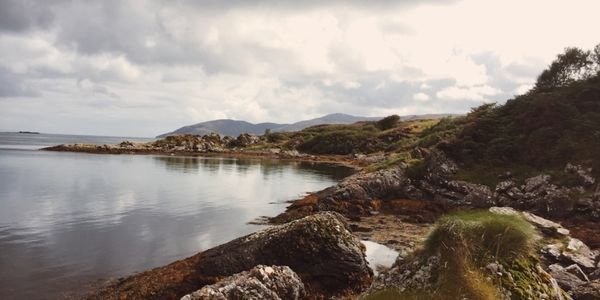
The wild coast of Islay
The island carries an extraordinary history. Finlaggan, a small loch at the centre of the island, was the seat of the Lords of the Isles, the most powerful rulers in Gaelic Scotland, who controlled a maritime kingdom stretching from Kintyre to the Outer Hebrides. The 8th-century Kildalton Cross, near Port Ellen, is one of the finest surviving Celtic high crosses in Scotland, still standing in the open air where it was made over 1,200 years ago. These are not minor details. This is an island with the history of a country.
Islay is also one of the finest wildlife destinations in Scotland. Over 50,000 barnacle geese arrive from Greenland each winter, gathering above Loch Gruinart Nature Reserve in a spectacle that stops even experienced birdwatchers in their tracks. Otters hunt along the east coast, particularly around Bunnahabhain, the distillery car park overlooks the shoreline where they fish at dawn and dusk. Sea eagles patrol year-round. Dolphins and basking sharks work the waters offshore.
Come for the festival. Stay for the island. The island will give you more than you came for.
The Music: Why It Matters
The Fèis committee was deliberate from the beginning: this was a festival of music and culture, with whisky as one strand among several. The music programme runs throughout the festival and is a genuine reason to come, even if you have never had a dram in your life.
The festival opens each year with a parade through Port Ellen, the island's main southern town, with pipe bands, local musicians, and the entire community out on the street to mark the beginning. It is a small-island moment, warm and slightly chaotic in the best possible way, and it sets the tone for everything that follows.
Folk Concerts & Traditional Music
Artists performing traditional Scottish and Gaelic music who play nowhere else during the festival season. Whisky nosing competitions that turn serious analysis into a genuinely funny communal experience. Storytelling sessions in Gaelic a reminder that the festival's roots are in community, language, and the oral tradition of an island culture that has been passing knowledge between generations for over a thousand years.
By the middle of festival week, music is coming from every direction from the distillery grounds, from the pub, from the village hall, from a car window on the single-track road. This is not background. This is the festival.
The Whisky: Because It Would Be Wrong Not To
Islay's whisky character comes directly from its landscape. The island is carpeted in deep peat bogs, formed over thousands of years from compressed sphagnum moss. Islay distillers traditionally cut this peat and burn it to dry their malted barley, infusing the spirit with a distinctively smoky, medicinal, maritime character of iodine, seaweed, bonfire, and sea salt that makes Islay whisky unlike any other in the world. The peat you smell in a glass of Laphroaig or Ardbeg is the same peat you walk across on the island's moorland. This is why tasting whisky on Islay tastes different from tasting it anywhere else. The context is part of the flavour.
Every major distillery in Islay participates in Fèis Ìle, each hosting its own open day with masterclasses, limited-edition releases, food, and live music.
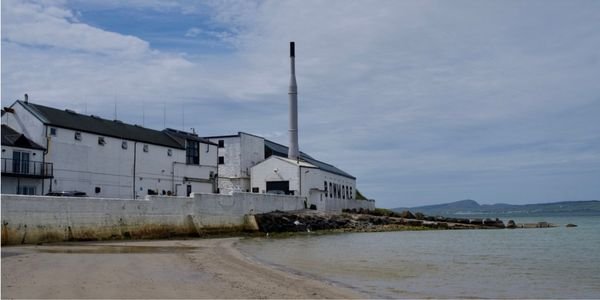
Bowmore, one of Islay's oldest distilleries.
➢ Famous for Cask-Strength Festival Releases
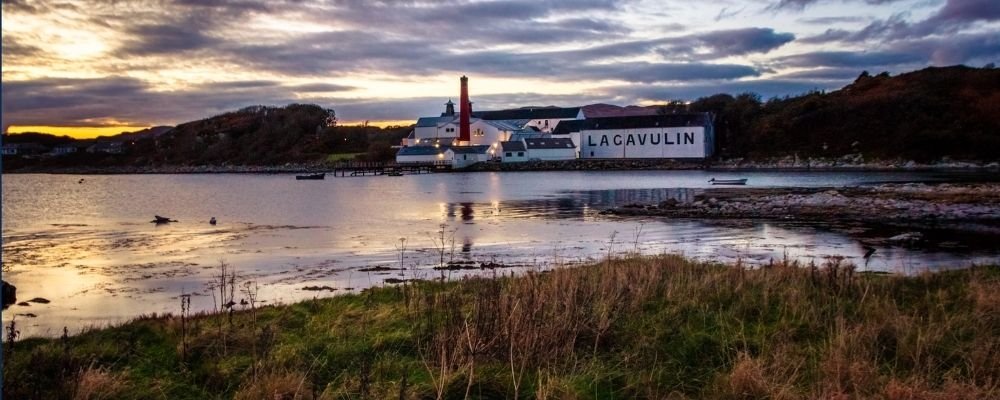
Lagavulin
Limited expressions available only on the island during festival week, produced in small quantities, and collected by enthusiasts who have travelled from Japan, the United States, Australia, and across Europe specifically to secure a bottle.
➢ Progressive, Terroir-Driven
Bruichladdich
Farm-to-glass, organic, Hebridean in character, presented with the educational engagement the distillery is known for. Open day emphasises the grain-to-glass story and the island's agricultural identity.
➢ Loudest & Most Social Open Day
Laphroaig
Live music, local craft stalls, and a shuttle from Port Ellen that arrives full and returns the same way. One of the most celebratory days in the festival calendar.
➢ Working Farm Distillery - Grain to Glass on Site
Kilchoman
Scotland's most westerly distillery operates as a working farm - you can watch barley being malted on site and follow the grain-to-glass process in a way no other Islay distillery makes possible.
➢ Most Remote - Worth the Drive
Bunnahabhain
At the end of a single-track road above the Sound of Islay - lighter and unpeated in style, spectacular in setting. Otters are regularly spotted on the shore below the distillery buildings. The most beautiful distillery approach on the island.
➢ Most Theatrical - Annual Limited Release
Ardbeg
Wraps the annual limited-edition release in a themed experience that changes each year. The release itself sells out almost immediately. The party goes on regardless.
🥃
Masterclass Tickets - Act Fast
When choosing a guide, the best question to ask is simple: Do they light up when they talk about Scotland? Genuine passion is impossible to fake, and it makes all the difference between a tour and an experience.
The Food: Islay on the Plate
The island's location on clean Atlantic waters means its seafood is outstanding. Fresh oysters, langoustines, scallops, and crab from local producers are available throughout the festival, and several events centre explicitly on pairing Islay's whisky with its seafood.
🦪
One Combination You Must Try
The whisky-and-oyster pairing at Bowmore, a glass of Bowmore alongside a freshly shucked Loch Fyne oyster, is one of the great food and drink combinations in Scotland. It is the most honest possible expression of terroir: sea, smoke, salt, and the mineral quality of water that has moved through peat for centuries, all in a single mouthful.
Each distillery open day features local food producers alongside the drams, and the festival has become an increasingly important platform for Islay's growing culinary identity, with producers, farmers, and chefs using the captive audience of several thousand enthusiastic visitors to showcase what the island grows, catches, and makes.
The Community: What Makes This Different
Fèis Ìle is run by a volunteer committee. It is a registered charity. It has no festival director and no commercial operator. It exists because the people of Islay believe it should exist, and they give their time to make it happen. This is not incidental to the festival's character. It is central to it.
The festival effectively triples the island's population for ten days. The island handles it with a warmth and ease that speaks to genuine community confidence; this is not a place that has been colonised by its own festival, but a place that has chosen to share itself.
👋
The Islay Wave
The tradition by which every driver waves at every other driver on the roads. First-time visitors invariably comment on it. You are on an island where people notice each other, where community is not an abstraction, and where being a visitor is genuinely different from being a tourist. That difference is something you will feel from the moment the ferry docks. It is harder to describe than the whisky and more valuable than the limited-edition releases.
Islay Beyond the Festival
If Fèis Ìle is sold out, or if the timing doesn't work, know this: Islay in any season is worth the trip. The island does not require a festival to justify itself.
• West Coast - Atlantic-Facing
Machir Bay
A sweeping stretch of white sand backed by dunes, with Atlantic breakers and almost nobody else, one of the finest beaches in the Hebrides and one of the most peaceful places I know of in Scotland.
• Near Bunnahabhain - Inexplicable & Wonderful
Singing Sands
A beach where the sand makes an audible sound underfoot when walked on, one of those small, inexplicable island phenomena that stays with you long after you've left.
• Centre of the Island - Medieval History
Finlaggan
The ruined island-seat of the Lords of the Isles, accessible via a short boardwalk across the loch. A small visitor centre tells the story of this forgotten centre of Gaelic power, one of the most significant but least-visited historical sites in Scotland.
• Near Port Ellen - 8th Century
The Kildalton Crossgan
One of the finest Celtic high crosses in Scotland is still standing in the open air where it was made over 1,200 years ago. Free to visit. Extraordinary in its detail and its setting. Do not drive past it.
• Nature Reserve - October to April
Loch Gruinart
The barnacle goose spectacle between October and April is genuinely one of the great wildlife events in Scotland, with over 50,000 birds arriving from Greenland, gathering in great grey clouds above the reserve. Rewarding year-round for wildlife of all kinds.
• Port Charlotte - Community Museum
Museum of Islay Life
A beautifully presented community museum covering the island's history from the Bronze Age to the present, including the full story of the Highland Clearances on Islay and the island's remarkable archaeology. Consistently among the most engaging small museums I've visited anywhere in Scotland.
Planning Your Trip
Islay is reached by CalMac ferry from Kennacraig to Port Ellen or Port Askaig in roughly two hours and fifteen minutes. Book well in advance for festival week, when sailings fill up months in advance. Details at calmac.co.uk. Loganair operates flights from Glasgow, approximately 40 minutes away. Details at loganair.co.uk.
• Essential Booking Information
FERRY -
FLIGHTS -
CAR-HIRE -
ACCOMMODATION -
FESTIVAL TICKETS -
MASTERCLASSES -
CalMac from Kennacraig - calmac.co.uk - Book months ahead for the festival.
Loganair Glasgow–Islay (~40 min) - loganair.co.uk
Essential - book well ahead; sells out for festival week.
Book 6+ months ahead for the festival; Islay House, Port Charlotte, Bowmore, Port Ellen.
No single pass - individual events via Skiddle; sign up at feisisle.co.uk
Sell out within minutes - mailing list essential
🚗
The Drive Itself Is the Experience
The tradition by which every driver waves at every other driver on the roads. First-time visitors invariably comment on it. You are on an island where people notice each other, where community is not an abstraction, and where being a visitor is genuinely different from being a tourist. That difference is something you will feel from the moment the ferry docks. It is harder to describe than the whisky and more valuable than the limited-edition releases.
It Was Never Just About the Whisky
The best whisky in the world tastes better in the place where it was made. Among people who care about both the spirit and the island that produces it. At a ceilidh that goes on too long. On a coastline that goes on forever.
Fèis Ìle understands this. It always has. The festival was built on the belief that whisky is an expression of the place of the peat, the water, the climate, the community and that the place itself is worth celebrating with the same seriousness and the same joy that goes into the spirit.
The whisky is extraordinary. The music is extraordinary. The landscape is extraordinary. The community is extraordinary. The combination of all four, compressed into ten days on an island of 3,000 people in the Atlantic, is something genuinely unlike anything else on the Scottish calendar.
"Come for the whisky, stay for the Island. It is worth every minute. And you will want to go back"